
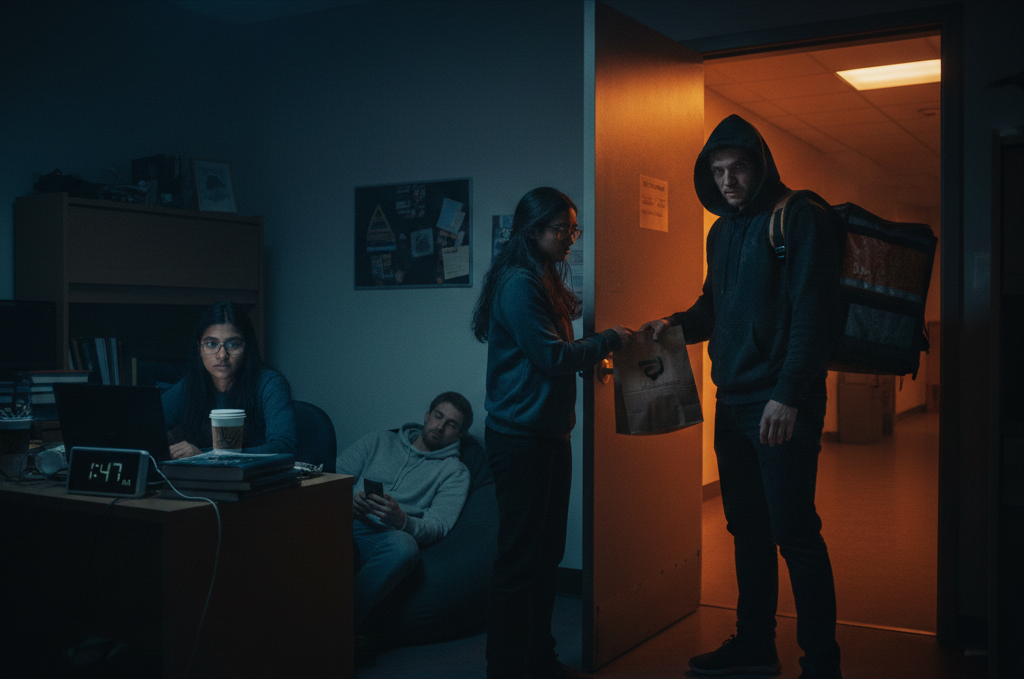
The Midnight Problem
It’s 1:00 AM during finals week. Your lobby is quiet, but your residents are wide awake. They currently have two choices: a bag of stale chips from a 1990s-era vending machine or a $30 DoorDash delivery that forces them to walk outside in the dark to meet a stranger.
In the industry, we call this the 24/7 Dining Gap. It’s the space where student wellness drops and safety risks rise. Improving student housing amenities in Philadelphia starts with closing this gap, ensuring your residents stay safe, fueled, and on-site without the friction of outside delivery.
Why “Old School” Vending is a Liability
For years, vending was a “set it and forget it” checkbox. But for the modern student, it’s a relic. Traditional vending is actually hurting your bottom line in three ways:
- Safety Risks: Every food delivery order requires a resident to exit the building or a stranger to approach the entrance.
- Health Slumps: Gen Z is redefining food culture, with 71% of young adults actively seeking out health-conscious choices.1 A lobby that only sells junk food feels out of sync with your brand.
- Maintenance Headaches: Broken coin slots and “out of order” signs are often the first thing prospective parents see during a tour.
Enter the Micro Market: The 2026 Amenity Standard
We’re seeing a shift across Philadelphia and neighboring cities. Top-tier properties are replacing “boxes of junk” with Smart Micro Markets. These are high-tech, small-footprint hubs that offer fresh bento lunches, high-protein fuel, and artisanal snacks.
The “Invisible Operator” Advantage
The #1 reason property managers hesitate to upgrade is the fear of added work. You’re already managing maintenance requests, leasing tours, and resident events. The last thing you need is to manage a grocery store in your lobby.
That’s where Vendeavor changes the math. We operate on a “Net-Zero Effort” model:
- No Capital Expense: We own the hardware; you own the “wow factor.”
- Invisible Maintenance: Our AI-driven inventory system tracks sales in real-time. We restock and service the hub before you even know a shelf is low.
- Enhanced Safety: By providing fresh meals on-site, you keep students inside the building, reducing “late-night lobby traffic” from outside delivery drivers.
The Bottom Line: ROI Through Retention
At Vendeavor, we don’t just “stock snacks”; we implement Nutritional Architecture. This is a data-driven approach to curation that supports the high-performance student lifestyle.2 By replacing stale chips with fresh bento meals and clean energy options, you transition from providing a simple vending machine to offering essential academic support.
This shift matters for your Net Operating Income (NOI) because modern renters are looking for more than just four walls. According to the 2024 NMHC Renter Preferences Survey, services that enhance wellbeing are now a top-three driver for a positive sense of community—which is the ultimate foundation of long-term resident retention.3
Closing the Hunger Gap isn’t just an upgrade; it’s a retention strategy that eliminates the $4,000 cost of a lost lease while adding zero operational weight to your team.
When parents visit for a tour, they don’t see a piece of equipment; they see a property that has already solved the silent, daily frustrations of student life. You’re offering wellness, safety, and a “wow factor” that makes your building the obvious choice.
Upgrade your lobby and keep your residents safe. If you are managing a student community in Philadelphia or surrounding areas, we can help you transition from traditional vending to a high-performance smart market. We offer a 5-minute site walkthrough to assess your lobby layout, power access, and custom menu requirements for the 2026 season.
- Toast POS (2025): Gen Z Dining Trends: 71% Prioritize Health-Conscious Choices. ↩︎
- Vendeavor Research (2026): Nutritional Architecture: Implementing High-Performance Fuel. ↩︎
- NMHC/Grace Hill (2024): Renter Preferences Survey: Wellbeing as a Community Driver. ↩︎